
Listening Beneath the Story: The Practice of Discernment
Reflections from a Conversation That Matters on the Practice of Discernment
We began with a question that sounded simple enough:
Think of a time in your life when everything felt completely aligned. What did that feel like? Not a time when we had all the answers, or necessarily knew what was going to happen next. Just a moment when, somehow, something felt right. Before talking about discernment, we wanted to remember that experience of knowing.
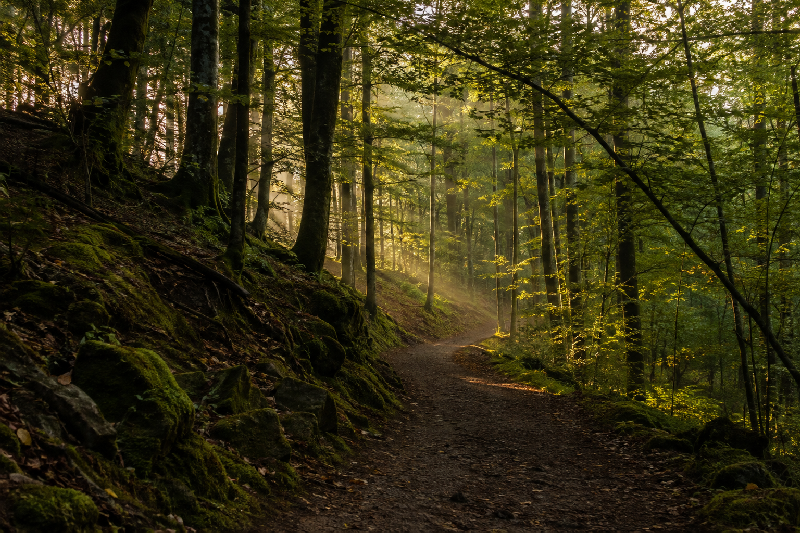
The sound of a Tibetan bowl opened the circle. Somewhere outside, a cricket seemed to join in. We became quiet and went looking for those moments in our lives when something simply felt aligned. What emerged were stories of nature, love, relationship, intuition, unexpected encounters, and experiences when the usual activity of the mind seemed to recede. Someone remembered being in nature and experiencing a profound sense of wholeness. Another spoke of a moment of love so complete that it changed how she wanted to see other human beings. Others described being drawn toward people or experiences without understanding at the time where they were being led. The experiences were different, yet beneath them was something remarkably similar: a knowing that seemed to precede explanation. Someone described it beautifully as “a knowing in the not knowing.”
A Knowing Before Knowing
We had deliberately chosen not to define discernment. We weren't interested in arriving at the right definition or teaching a method for becoming more discerning. Instead, we wondered:
How do we recognize our own knowing? And what gets in the way?
Almost immediately, the conversation turned toward things familiar to nearly everyone—the mind, busyness, expectations, fear, old wounds, the desire to prove something, the need to be right, and the stories we tell ourselves about what is happening. One person described the inner movement of: I have to do something. I have to prove something. I have to become something. Another recognized how busyness can become a way of avoiding suffering. Someone else spoke of a particular chair in her home where she goes when she feels triggered or unsettled. Sitting there, becoming quiet, she can once again hear what her heart is saying.
Again and again, different people described variations of the same movement: pause, slow down, become still, return to the body, go into nature, meditate, create space. Not as ways of escaping life, but as ways of becoming available to it again. At one point, the word retreat took on a different meaning. Perhaps retreat isn't only somewhere we go for a weekend or a week. Perhaps sometimes we need simply to retreat from the busyness, from the mental activity, from our need to immediately understand what is happening. When we step back, something else has room to appear.
Letting the Mud Settle
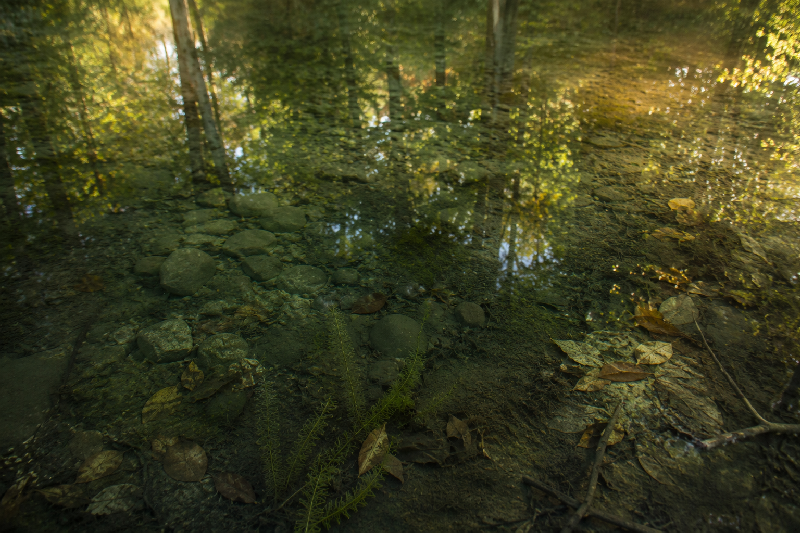
Then came an image that seemed to capture much of what we were discovering. One participant described being in conflict with a close friend. The exchange had stirred anger and agitation in her body, and her mind immediately began producing explanations and familiar language about what had happened. Instead of following those explanations, she imagined herself sinking beneath the surface of a lake. The water was muddy, filled with sediment. She realized there was nothing she needed to do to make the water clear. She needed stillness. If she stopped disturbing it, the sediment could settle on its own. “I needed stillness to create clarity.”
Perhaps discernment sometimes works like that. We want clarity, so we think harder. We analyze, explain, categorize and search for the correct interpretation. Yet what if clarity is not always something we produce? What if sometimes it appears when we stop stirring the water?
Between What Happens and the Story We Tell
That possibility became tangible through another difficult encounter shared in the circle. A participant described sitting across from someone who was angry with her. She felt accused and misunderstood. Her body responded immediately; her heart was burning. Everything in her wanted to defend herself and say, That isn't true. Then another voice arose within her: “I don't have to change her story.” She stopped. Another question appeared: Why is she doing this? What is she trying to achieve? Again something quieter responded: I don't have to know the reason.
In relinquishing both the need to be right and the need to understand the other person's motives, another possibility became available. She listened. Eventually, without planning what she would say, she heard herself make a simple request: “Please see humanity in me. I'm a human being. I feel. I get hurt.” It was one of those moments when the conversation about discernment became the practice of discernment. The response didn't seem to come from better analysis. It came when the need to defend, interpret and control loosened enough for something else to become audible.
From there, our conversation began moving toward the stories we tell. How much of what we call reality is what happened, and how much is the story we construct about what happened? We observe someone's behaviour and almost instantaneously create an explanation. They ignored me. They don't respect me. They're angry with me. They're trying to hurt me. Something happens, and before long our interpretation of what happened becomes what happened.
One participant described her practice of stopping before assigning motives to another person. She can know what someone said. She can notice what they did. She can recognize what she feels in response. But their interior world? She doesn't actually know. That simple recognition creates space. Instead of asking What kind of person are they? or Why did they do this to me?, another question becomes possible: What am I actually experiencing right now? Perhaps discernment asks us to become more aware of this distinction—between experience and interpretation, between what we know and what we think we know, between the event and the story.

From Me to We
And then the inquiry widened. We had spent much of our time exploring our individual ways of knowing. But what happens when we bring our knowing into relationship?
Can we discern together? What might become possible when we listen and discern together?
Almost immediately someone asked, “What do you mean by we? ”Rather than defining it, we allowed the conversation to discover its own answer. One participant returned to the earlier conflict she had described and noticed something she hadn't seen before. She had entered the conversation from a place of we: How can we find a way forward that works for everyone? Yet the other person seemed to be experiencing the encounter as you and me. Perhaps, we began to wonder, we is not simply a collection of people. Perhaps it describes a quality of relationship—a willingness to enter a situation knowing that my wellbeing and yours somehow belong in the same conversation.
Another participant spoke about a practice she and her husband have developed when facing an important decision. If one feels clearly yes and the other clearly no, they don't force a decision. They wait. Again and again, she said, another possibility eventually appears—something neither of them could see alone. That story brought us toward another dimension of discernment: What becomes possible when no one needs to possess the answer?
What We Cannot See Alone
As we stayed with that question, discernment began to feel less like an individual skill and more like a relational capacity. Someone else's perspective can disturb our certainty. Speaking aloud can allow us to hear our own thinking differently. Another person's experience can reveal an assumption we didn't know we were carrying. And sometimes something seems to emerge between people that none of them brought into the room.
This does not mean surrendering our own knowing to the group. Collective discernment is not conformity, and the presence of others does not guarantee wisdom. Perhaps it asks something more demanding: to remain rooted enough in ourselves to hear our own experience while remaining open enough to be changed by another. One participant described this as exploring “me through we.” Other people become mirrors. Difference becomes more than something to tolerate or overcome; it becomes part of how we discover the limits of our own seeing. Without perspectives that disturb our own, we can remain comfortably enclosed within the world we already know. Perhaps this is part of the gift of dialogue: we do not necessarily come together to reach agreement; we come together because there are things we cannot see from where we stand alone.

Before the Story
Toward the later part of our time together, the inquiry moved somewhere none of us had planned. If so much confusion can arise from the stories we create, someone wondered what might happen if, even briefly, we stopped creating stories. Not better stories. Not more positive stories. Just no story yet.
Could we remain for a little while in curiosity before deciding what something means? Someone noticed that stories require language, while some of our deepest experiences of knowing seem to arrive before language. When something feels profoundly aligned, there may initially be no words for it. The words come afterward. The explanation comes afterward. The story comes afterward.
This left us with an intriguing paradox. We are meaning-making beings. Interpretation is part of being human, and discernment inevitably involves making sense of our experience. Yet perhaps the practice also asks us to develop the capacity to linger for a little while before interpretation—to stay close to the sensation in the body, the movement of the heart, the facts we genuinely know, the uncertainty we genuinely don't, and the space between them. Perhaps this is one of the places where discernment differs from certainty. Certainty wants to close the question. Discernment may ask us to remain with it.
And Then Listen Again
We never arrived at a definition of discernment. That wasn't our intention. Yet by the time we came toward the end of the circle, something about the word seemed to have changed. Discernment felt less like figuring something out, less like separating right from wrong, and less like achieving certainty. It began to feel more like listening.
Listening beneath the noise. Listening to the body and the heart. Listening for the stories we are constructing. Listening for what we don't know. Listening to another person without immediately needing to agree, disagree, fix, persuade or interpret. And perhaps, when enough of us listen in this way, listening for something that can only emerge between us.
There was a quiet realization in this. Throughout the entire conversation, we had already been practicing the very thing we had gathered to explore. Every time someone spoke, the rest of us were noticing what was happening within ourselves. Every time we chose whether to speak or remain silent, we were discerning. Every time another person's words unsettled something, opened something, or allowed us to see differently, another possibility entered the conversation.
We had come together to talk about discernment. Instead, for a little while, we found ourselves inside the practice of it.
Perhaps that is where discernment ultimately lives—not in having the right answer, but in cultivating enough stillness to hear, enough humility to question our stories, enough courage to remain in not-knowing, and enough relationship to discover what none of us can see alone.
Maybe the practice begins with something very simple: Pause. Listen. Notice what is here before deciding what it means.
And then listen again.
For those who were present, may this reflection evoke something of the stillness and spaciousness we shared together.
For those who were not, consider this an invitation into deep listening - going beneath and beyond the story.