Living with Cascading Crises
A reflection from our March 12 Conversation That Matters
On March 12th, we gathered in a Conversation That Matters to explore a question that many of us are quietly living with:
How do we live with cascading crises?
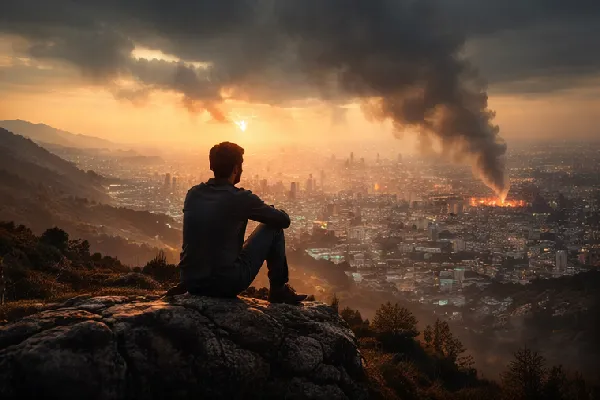
Not just the crises we read about in the headlines—ecological instability, political conflict, social fragmentation—but the way those pressures ripple into our inner lives. Into our decisions, our relationships, our nervous systems.
We began with a simple question:
Where do you most feel the weight of today’s overlapping crises in your life?
The answers were not abstract.
Several spoke about the subtle ways the turbulence of the world is shaping everyday life. Small decisions becoming harder. Irritation and agitation surfacing without clear cause. A sense that something heavy is present beneath the surface of ordinary interactions.
Others described what felt like nervous system overload—the mind trying to process everything at once while the heart struggles to keep up.
One voice shared how the crises of the world seem to mirror personal ones. Rage, despair, longing, compassion—everything moving together. The desire to create something better rising alongside the recognition of how difficult that feels.
Again and again, the conversation returned to the body.
Pressure in the head.
Heaviness in the heart.
A grief that felt collective.
Some noticed how they had been protecting themselves from feeling too much of the world’s pain. Others spoke of hyper-activation—constantly scanning, trying to make sense of what is happening.
And yet, beneath the storm, there were glimpses of stillness.

One participant described it as swimming in stormy waters while sensing a quiet center somewhere within.
Another reflected on the temptation to rush into action—to fix, solve, do something—only to realize that doing can sometimes keep us from feeling what is actually present.
Perhaps part of living with cascading crises is learning when to act…
and when to pause long enough to feel.
There was a shared recognition that awareness itself can be a classroom.
Moments of judgment revealing something inside ourselves.
Opportunities to notice where peace is missing within us before we try to restore it in the world.
One person said simply:
“I don’t want to add energy to any fire.”
Instead, they were practicing stepping back from the noise of the news and reconnecting with a quieter compass. Nature was mentioned often. Not as an escape, but as a reminder of a deeper rhythm beneath the turbulence.
In the midst of all this, the conversation shifted from the individual to the collective.
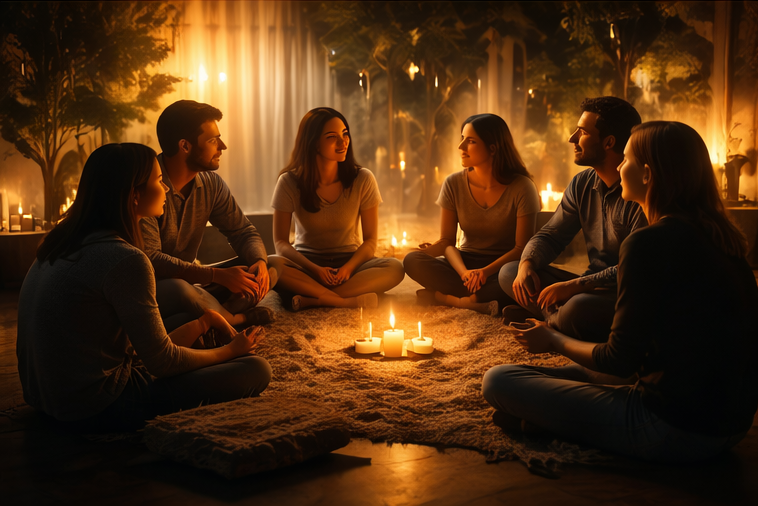
Several people spoke about the importance of spaces like this one—places where we can hear ourselves think out loud while being witnessed by others. Places where we can feel part of the collective field rather than isolated inside our own processing.
For one participant, that realization brought a sense of relaxation.
A love of humanity returning.
Another noticed the tension between wanting to save others and recognizing the limits of what one person can do. The question emerged: Where does real change come from?
Perhaps not from heroic solutions, but from smaller acts—living with greater awareness, compassion, and integrity in the relationships directly around us.
There was also an acknowledgment that something in our world may be breaking down.
Old structures, old identities, old stories.
One person spoke about leaving a community with a sense of heartbreak—trying to do so with tenderness rather than resentment. Another reflected on the symbolism of the tarot: the tower, the death card, the old structures falling so that something new can emerge.
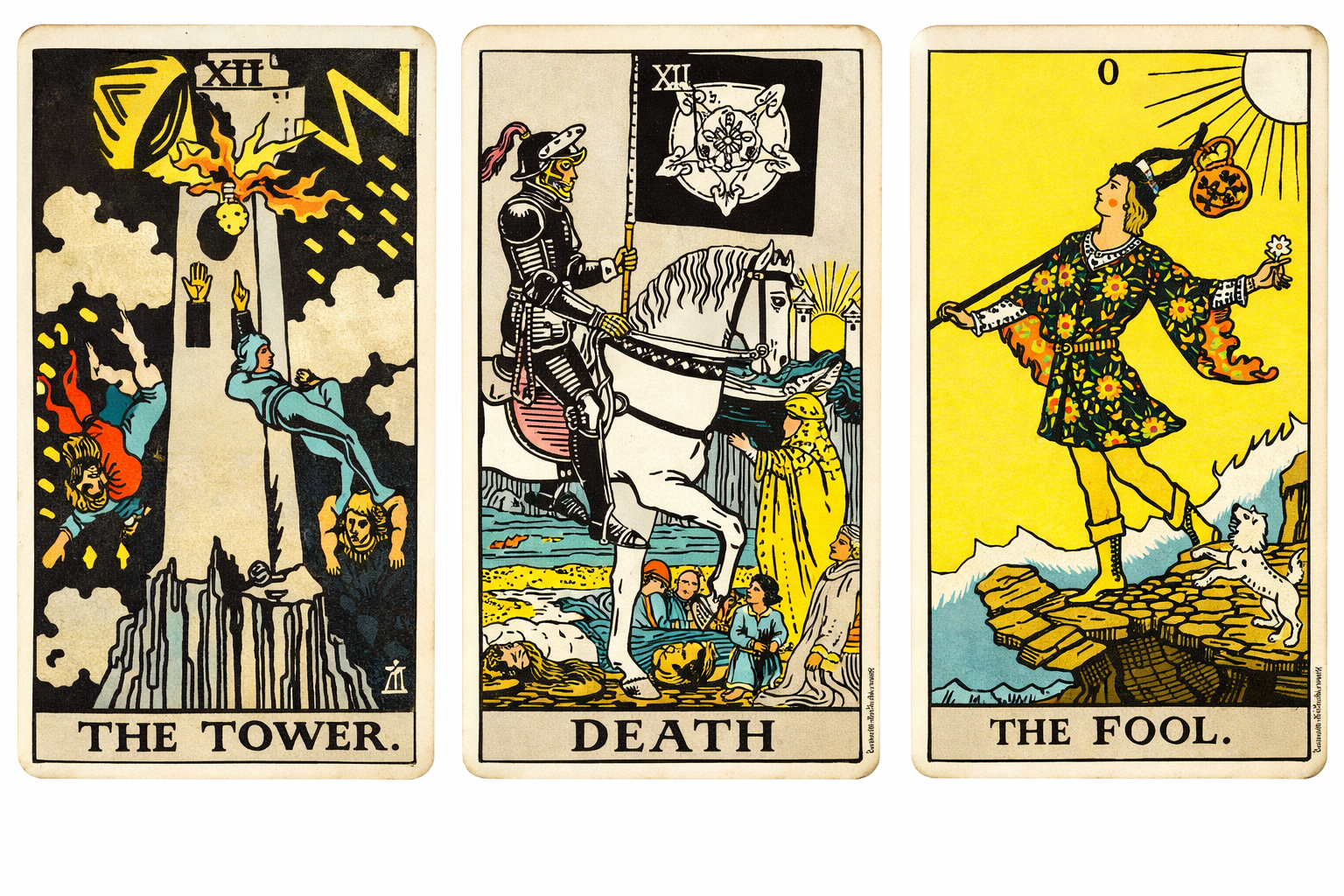
If something new is to be born, something old may have to die.
And yet even in that recognition, there was a surprising lightness.
A reference to the fool in the tarot—the archetype of innocence and openness, stepping into the unknown without certainty.
Perhaps living with cascading crises requires some of that same spirit.
Curiosity instead of collapse.
Openness instead of rigid knowing.
One voice spoke about islands of coherence—small communities where people come together to listen, reflect, and reconnect with deeper values. These islands may feel small, but their influence grows as more voices join them.
In these spaces, something important becomes visible:
We have everything we need—together.
One participant shared a moment of realization:
“I did not see what is right with me until I showed up here. I have wisdom.”
Another added:
“I need me, and I need you.”
Perhaps collective sense-making begins exactly there—in recognizing that our differences, our reflections, and our presence with one another allow something larger to emerge.

As the dialogue came to a close, the atmosphere in the room had shifted.
People spoke of gratitude.
Of love moving through the space.
Of belonging.
Several mentioned a feeling of being seen and witnessed.
Others described a calmness settling in—like waters becoming still after a storm.
One participant named the experience beautifully:
A co-breathing.
A pause together.
In a world moving quickly, sometimes the most radical act is simply slowing down enough to listen—to ourselves, to one another, and to the deeper currents of life moving beneath the noise.
Living with cascading crises may not require that we solve everything.
It may ask something more human of us:
To stay present.
To cultivate inner peace while facing outer disruption.
To choose compassion even when the world feels fractured.
To gather in spaces where truth, care, and wisdom can emerge together.
For those who were present, perhaps this reflection brings back the feeling of that shared pause.
For those who were not, consider it an invitation.
Because in times like these, we may not need certainty as much as we need places where we can remember who we are—together.